
 Image 1 of 1
Master prehospital documentation with confidence.
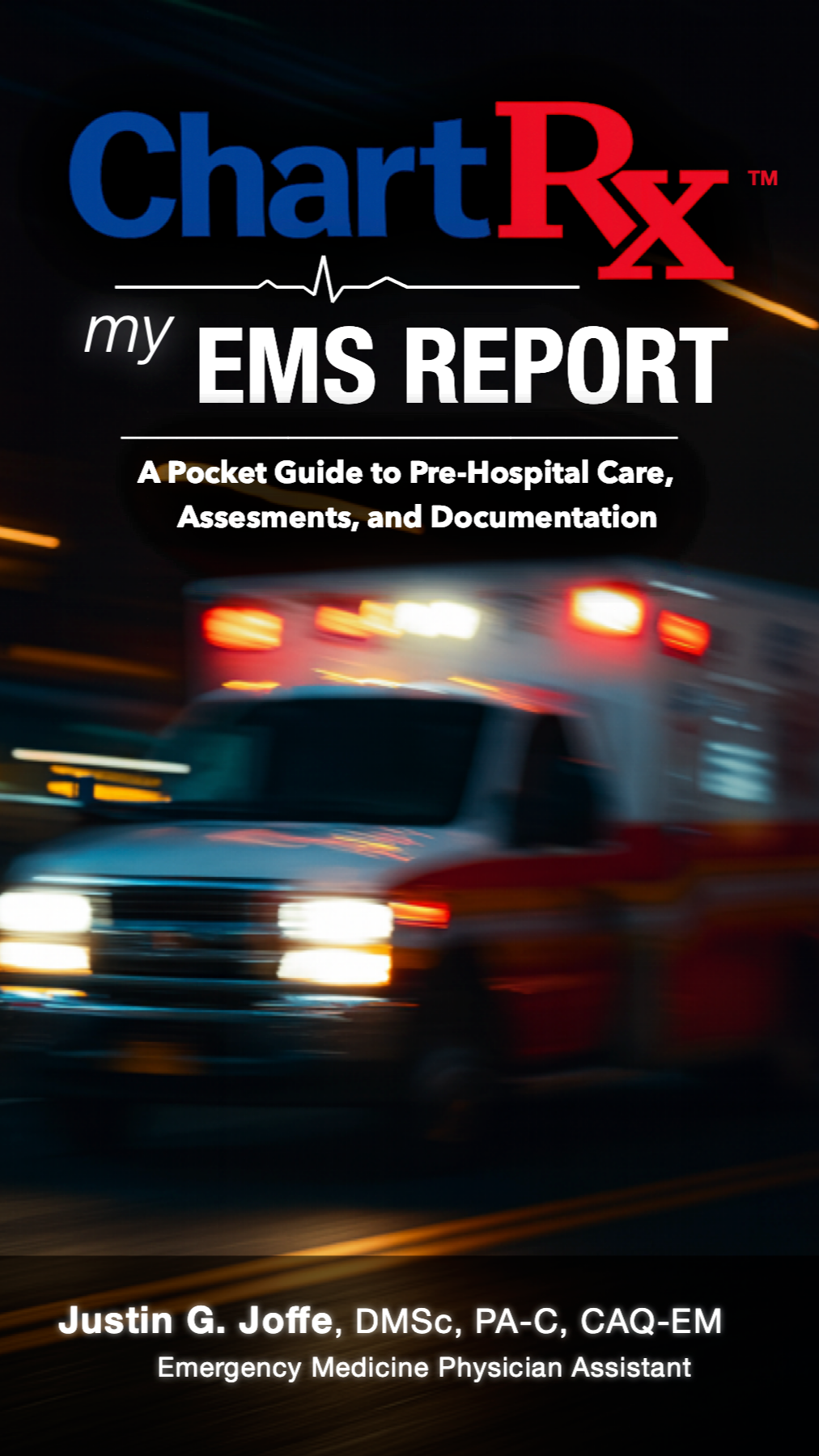
ChartRx My EMS Report is a practical pocket reference designed for EMTs, AEMTs, paramedics, EMS students, and prehospital clinicians looking to strengthen documentation, improve clinical reasoning, and create clear, defensible patient care reports.
Whether you’re documenting a routine transport, critical trauma, cardiac arrest, pediatric emergency, or high-acuity medical call, this guide provides structured frameworks, documentation strategies, and real-world examples to help you chart more accurately and efficiently.
Built from years of frontline emergency medicine and EMS experience, ChartRx My EMS Report emphasizes documentation that not only tells the patient’s story, but also improves communication with receiving providers, reduces medicolegal risk, and supports high-quality patient care.
Documentation frameworks for common EMS encounters
High-yield narrative writing strategies
Clinical reasoning pearls for stronger PCRs
Tips to improve EMS-to-ED handoffs
Medicolegal documentation guidance
Practical examples and documentation templates
Perfect for EMS students, new providers, experienced clinicians, and anyone looking to document with greater confidence.
Assess confidently. Scene to stretcher. Document with confidence. Improve handoffs.
Master prehospital documentation with confidence.
ChartRx My EMS Report is a practical pocket reference designed for EMTs, AEMTs, paramedics, EMS students, and prehospital clinicians looking to strengthen documentation, improve clinical reasoning, and create clear, defensible patient care reports.
Whether you’re documenting a routine transport, critical trauma, cardiac arrest, pediatric emergency, or high-acuity medical call, this guide provides structured frameworks, documentation strategies, and real-world examples to help you chart more accurately and efficiently.
Built from years of frontline emergency medicine and EMS experience, ChartRx My EMS Report emphasizes documentation that not only tells the patient’s story, but also improves communication with receiving providers, reduces medicolegal risk, and supports high-quality patient care.
Documentation frameworks for common EMS encounters
High-yield narrative writing strategies
Clinical reasoning pearls for stronger PCRs
Tips to improve EMS-to-ED handoffs
Medicolegal documentation guidance
Practical examples and documentation templates
Perfect for EMS students, new providers, experienced clinicians, and anyone looking to document with greater confidence.
Assess confidently. Scene to stretcher. Document with confidence. Improve handoffs.